Your phone says Orange. The state forecast says Yellow. On a sticky August morning at the shore, when your sunglasses fog the second you step off the porch, both numbers can show up within minutes, and only one reflects what your family is breathing.
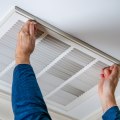
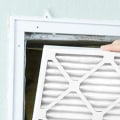
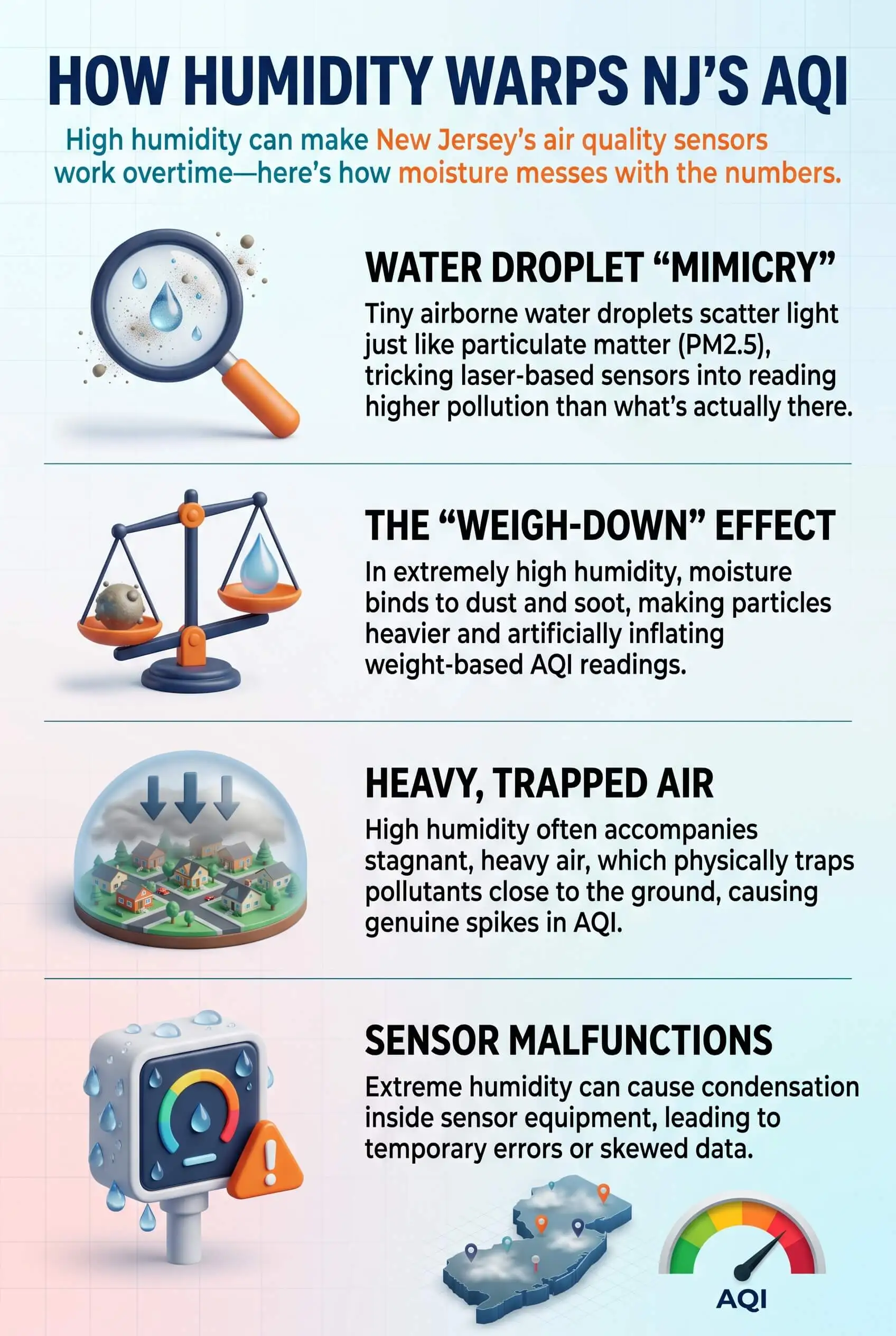
Humidity is usually behind the gap. Water vapor makes many home monitors and phone-linked sensors read higher than the air really is, because it swells the particles they count. Hot, humid, stagnant weather can also push actual ozone and particle levels up. Once you know which effect you're looking at, a confusing number turns into a decision you can make with confidence. A pleated furnace filter helps capture fine airborne particles that enter your home, giving your family cleaner indoor air when outdoor pollution levels rise.
TL;DR Quick Answers
air quality New Jersey
New Jersey’s air quality is usually Good to Moderate, but summer ozone and drifting wildfire smoke can push it into Orange. Check the official NJDEP reading first, because humidity makes many home sensors read high on muggy mornings. The New York-Newark area earned an F for ozone in 2026.
Start with the official number: NJDEP and AirNow readings come from reference-grade monitors and hold steady when the air turns damp.
Watch summer afternoons: Ozone peaks on hot, hazy, still days from mid-May through September, usually after lunch.
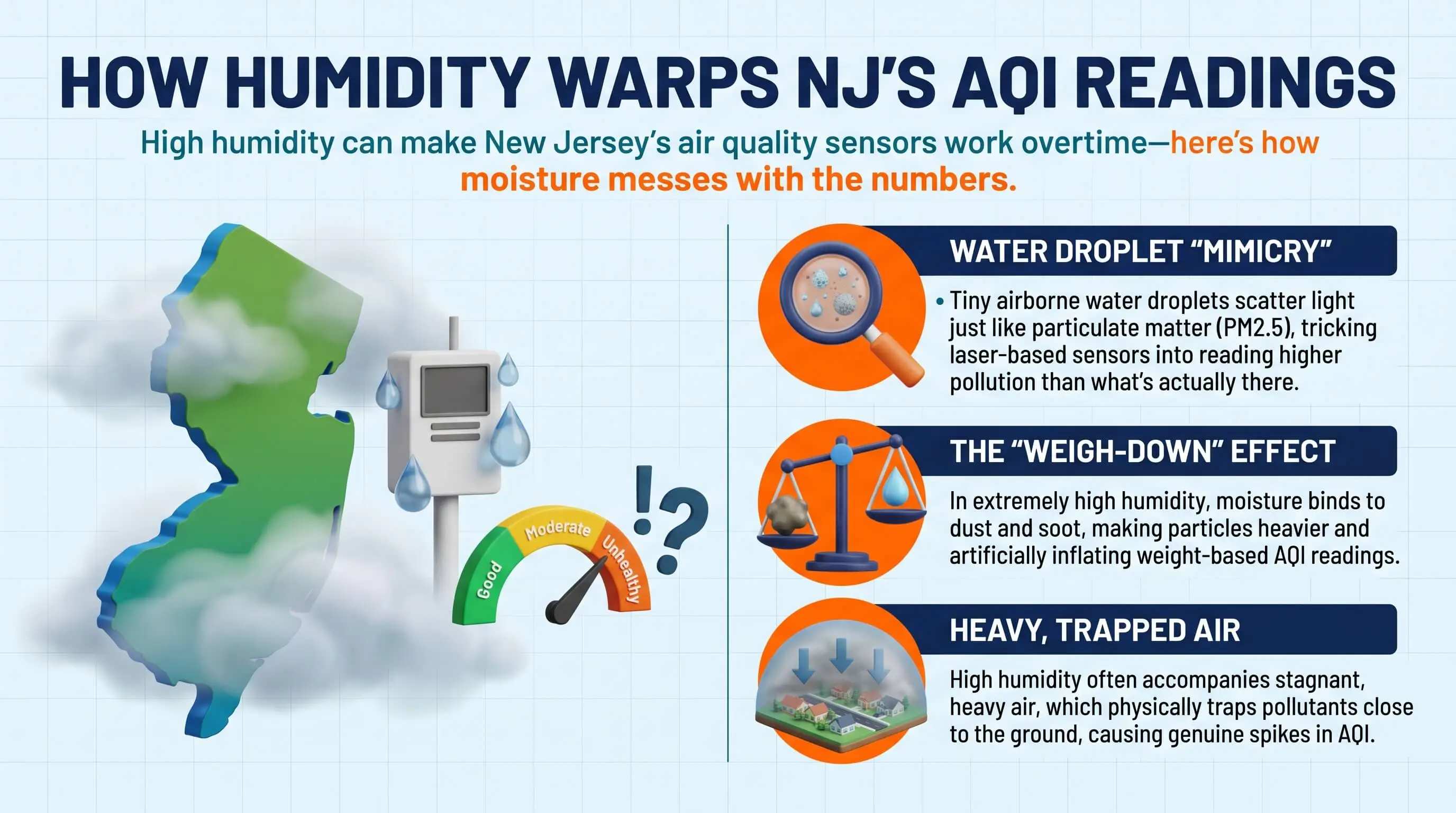
Question one muggy spike: Damp air swells particles, so uncorrected low-cost sensors can overstate PM2.5 by about 40 percent.
Protect the air at home: Keep indoor humidity between 30 and 50 percent and run a clean filter when the AQI climbs.
Top Takeaways
Damp air makes many low-cost sensors read high, because water swells the particles they count.
Official New Jersey readings use reference-grade monitors and multi-hour averages, so they hold steadier.
Hot, hazy, windless days often bring true ozone and particle spikes.
Rain and a passing cold front usually bring readings down within hours.
Indoors, aim for 30 to 50 percent humidity with a right-sized AC, a clean filter, and the fan on Auto.
Why Humidity Can Make Air Quality in New Jersey Look Worse Than It Is
Most home air monitors and community sensors never weigh a single particle. A tiny laser shines through a stream of air, and the sensor counts the flashes of light that particles bounce back. That design keeps the price low and the readings fast. It also helps explain the simplest AQI meaning: a number that shows how clean or polluted the air is and what that means for your health. Water trips it up.
What Happens to Particles in Muggy Air?
Many airborne particles, especially sulfates and sea salt, soak up water vapor and swell. Scientists call these particles hygroscopic. A swollen particle scatters more light, so the sensor reports it as bigger and heavier than it is. In a 2024 study in Atmospheric Measurement Techniques, Mathieu-Campbell and colleagues named humidity as the main source of error in PurpleAir sensors and found readings curving upward once relative humidity passed about 50 percent.
New Jersey crosses that line easily. Summers run warm and humid statewide, and shore towns from Cape May to Sandy Hook sit in damp ocean air for months at a time.
Why Official Readings Hold Steadier
New Jersey's regulatory monitors use reference-grade instruments, and the AQI they report averages several hours of data instead of one snapshot. EPA researchers built a correction so community sensors can line up with those monitors, and they gave it a humidity term for exactly this reason. Here's how agencies calculate the Air Quality Index if you want the details.
When Does Humidity Actually Make the Air Worse?
Some humid-day spikes are the real thing. Muggy weather often shows up with conditions that trap pollution near the ground, and on those days the sensor is right.
Hot, Hazy, Humid, and Still
Ground-level ozone forms when strong sunlight cooks the exhaust from tailpipes and smokestacks. New Jersey's worst ozone afternoons tend to land during hot, hazy, humid stretches with almost no wind, the kind of stagnant air that parks over the state during a heat wave. While humidity doesn't create ozone on its own, it travels with the weather pattern that does, and New Jersey sits downwind of both the New York City and Philadelphia metro areas.
Haze and Secondary Particles
Damp air also gives certain pollutants a place to react. Sulfur and nitrogen gases can turn into fine sulfate and nitrate particles inside microscopic water droplets, adding PM2.5, the particles small enough to reach deep into your lungs. That milky haze hanging over the Garden State Parkway in July is partly this chemistry at work.
Why a Thunderstorm Often Clears the Air
Rain pushes readings the other way. Falling drops sweep particles out of the sky, and the cold front behind a summer storm usually brings in drier, cleaner air. Within a few hours, the numbers often drop.
How to Read Air Quality in New Jersey on a Humid Day
Run through these checks before you cancel the soccer game over one muggy reading.
Start with the official number. Pull up live air quality readings across New Jersey before you trust any single sensor.
Hold your app up against it. When your app runs a full color category higher on a damp morning and nothing else has changed, moisture is the likely culprit.
Look at the humidity or dew point. A higher dew point means damper air. PM2.5 that climbs in step with humidity, with no smoke smell or haze, points to water on the particles.
Follow the trend for a few hours. Pollution events build slowly. Humidity spikes tend to fade by late morning as the air warms and relative humidity falls.
Check again after lunch on hot days. Ozone peaks in the afternoon, so a clean 8 a.m. reading can still turn Orange by 3 p.m.
Pro Tip: Keep an indoor monitor well away from the bathroom door and the stove. If yours jumps every time someone showers or boils pasta, it's reading steam, and moving it a few feet usually solves the problem.
Indoor Humidity, Your AC, and the Air Inside Your Home
Don't take your indoor air for granted! The same moisture that fools an outdoor sensor shapes the air your family breathes at home, and you rarely see it until mold shows up on the bathroom ceiling. EPA recommends keeping indoor relative humidity below 60 percent, ideally between 30 and 50 percent, to stop mold from taking hold. Dust mites, a common allergy trigger, multiply once humidity passes 50 percent.
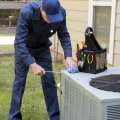
Your air conditioner does most of the moisture work. As warm air crosses the cold coil, water condenses and drips into a drain line. A right-sized system runs long enough to pull that water out of the house, but an oversized unit cools the rooms fast, shuts off early, and leaves everything cold and clammy. Humidity plays a big part in whether running your AC all day helps or hurts.
Two small habits help on muggy days. Set the thermostat fan to Auto instead of On so coil water drains away instead of blowing back inside. And keep the filter clean, since a clogged one chokes airflow and can freeze the coil on the heaviest days. Both take little effort and help extend the lifespan of AC unit components while protecting your greatest assets: your family, your home, and your HVAC system.
"Whenever I compare low-cost monitors with reference instruments in humid homes, I watch two numbers side by side. If PM2.5 rises in lockstep with relative humidity and falls back as the afternoon dries out, the pollution level never moved, only the water clinging to the particles."
7 Essential Resources
I check these sources before I trust any humid-day reading.
See the official number first. The New Jersey live air quality map shows current AQI readings by region for a quick comparison with your app.
Go straight to the state forecast. NJDEP's AQI Today page comes from the agency running the state's monitors and links to EnviroFlash alerts.
Learn what each color means. AirNow's AQI Basics explains the 0 to 500 scale and each category's health guidance.
Check tomorrow before you plan it. The National Weather Service Mount Holly air quality statement gives the next day's forecast and main pollutant by county.
See why sensors read high. This 2024 study on PurpleAir sensors in high humidity shows how damp air bends readings upward.
Set a target for indoor humidity. EPA's brief guide to mold, moisture, and your home gives the 30 to 50 percent range I aim for indoors.
Look after sensitive lungs. The Asthma and Allergy Foundation of America explains three ways humidity affects asthma, from heavier air to dust mites and ozone.
3 Statistics
About 40 percent: EPA researcher Karoline Barkjohn and colleagues found raw PurpleAir sensors overestimated PM2.5 by roughly that much across 16 states. Their humidity-aware correction cut the typical error from 8 to 3 micrograms per cubic meter. Source: Barkjohn et al., Atmospheric Measurement Techniques
12th worst in the nation: that's where the American Lung Association's 2026 report ranked the New York-Newark metro area for ozone, with an F grade that worsened for a third straight report. Source: American Lung Association, State of the Air 2026
About 12 nights a year: New Jersey's long-term average for warm nights that never drop below 70°F. NOAA reports the state has stayed above that average since 2000. Source: NOAA State Climate Summary for New Jersey
For families comparing cities to move to for diversity, New Jersey's air quality is another factor worth considering. EPA research found that PurpleAir sensors can overestimate fine particle pollution by about 40%, while the New York-Newark metro area ranked 12th worst nationally for ozone in 2026. With New Jersey also experiencing more warm nights, checking local air quality and climate conditions can help families make informed decisions about where to live.
Final Thoughts
In my view, humidity is the most misunderstood variable in New Jersey air quality. I see people panic over a damp-morning spike and others shrug off a true ozone day because the air "just feels muggy." Both reactions treat one number as the whole story.
My advice is to trust the official reading for health decisions and use a home sensor for trends on your street. Once you can see what moisture is doing to the numbers, you can protect your family with confidence instead of guesswork. Pairing that knowledge with high quality filters in your HVAC system can also help reduce indoor airborne particles and keep your home's air cleaner.
Frequently Asked Questions
Is Air Quality Worse in New Jersey When It's Humid?
Sometimes. Humid, stagnant summer days often bring actual ozone and particle increases. High humidity also makes many home sensors read higher than the air really is, so a muggy-morning spike isn't always a pollution event. The official reading tells you which one you're seeing.
Why Does My Air Quality Monitor Read High When It's Humid?
Most consumer monitors count particles by the light they scatter, and water-loving particles swell in damp air and scatter more of it, so the monitor reports pollution that isn't there. Shower steam causes the same jump indoors.
Does Rain Improve Air Quality?
Usually, yes. Rain washes particles out of the air, and the cooler, drier air behind a passing front tends to be cleaner. Readings often fall within a few hours of a storm.
Which New Jersey Air Quality Reading Should I Trust?
For health decisions, go with the official AQI from New Jersey's regulatory monitors or a map built on them. Home sensors work well for spotting neighborhood trends but need a humidity correction to match official numbers.
What Indoor Humidity Is Best for Air Quality?
EPA recommends keeping indoor humidity below 60 percent and ideally between 30 and 50 percent. That range keeps mold and dust mites in check while the air still feels comfortable to breathe.
Read the Number Behind the Humidity
The next time a muggy morning turns your app Orange, pull up the official New Jersey reading and the humidity side by side before you change your family's plans. Once you know how humidity affects air quality readings, you're the one deciding what the air means for your household, indoors and out. Using affordable filters in your HVAC system can also help reduce indoor airborne particles without putting extra strain on your household budget.